A Harness Is What Lets You Work at Height
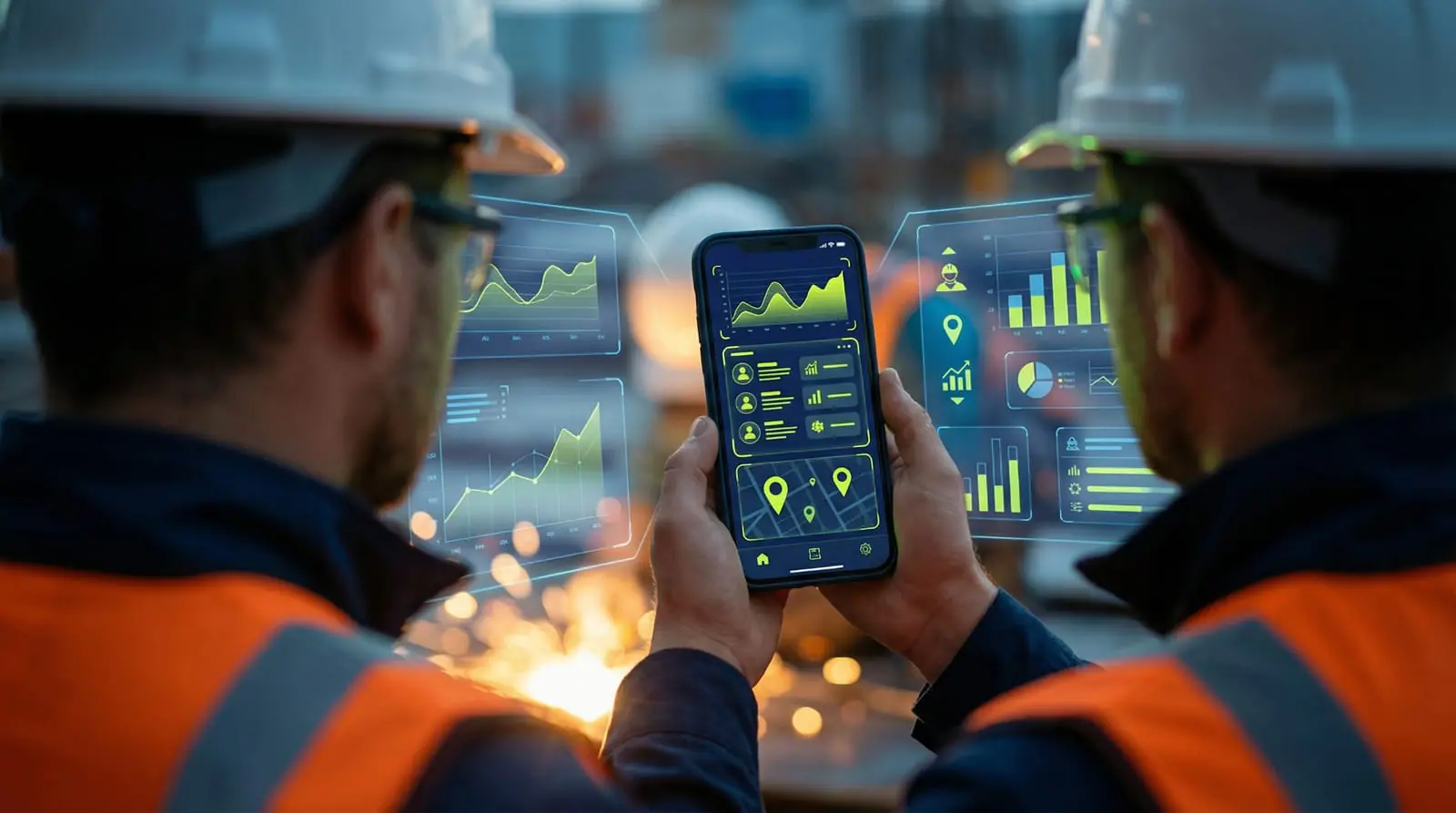
Quick answer: An AI harness in construction is the control layer around the AI: it defines what the AI can read, what it may do without asking, who signs off before anything leaves the office, and what record proves the decision a year later. A harness is not the intelligence. A harness is what makes intelligence safe to point at a live job.
Key Takeaways
- ●A harness is not a brake. On a jobsite, a harness is the equipment that lets someone work somewhere they could not otherwise go.
- ●Fall protection is the most frequently cited OSHA standard in construction, which is why the word carries weight with this reader rather than borrowed weight.
- ●Four parts make a harness real: an anchor point, a tie-off, an arrest, and an inspection record. Everything else is a demo.
- ●Most construction AI stops at drafting with a human review. Review is necessary and nowhere near sufficient.
- ●The question that separates a harness from a chat window: what can it do on its own, and what physically stops it?
Nobody Straps In to Stand on the Ground
Walk any site and you will see harnesses on people doing the work that pays. Nobody wears one to stand in the gravel lot. You strap in because you are going somewhere valuable and unforgiving, and the harness is the reason going there is allowed.
That is the whole argument for governed AI in construction, and it is why the word is worth using carefully. A harness is not a brake, and it is not a compliance checkbox. A harness is permission to operate at height.
The reader already knows this in their body. Fall protection, general requirements, is the most frequently cited standard OSHA writes in construction, with 6,772 citations across 6,639 inspections in a single year. The object is not a metaphor to this audience. It is the thing hanging in the gang box.
The Problem Is Not That AI Is Not Smart Enough
Most of the conversation about AI in construction is about capability. Can it read the spec. Can it compare two drawing revisions. Can it draft the RFI.
It can. That stopped being the hard part a while ago, and it will keep getting cheaper, because the intelligence is rented rather than owned. Every competitor will have roughly the same capability inside two years.
The problem isn't that AI is not smart enough. It's that nobody will let it touch anything that matters.
No general contractor loses money because the software was not clever. They lose money because a decision got made without the right approval, against the wrong revision, with no record of who authorized it. That is a controls problem wearing a technology costume.
The Four Parts of a Real Harness
Borrow the vocabulary from the equipment, because the equipment has already solved this. Four parts, and a harness missing any one of them is not a harness.
1. Anchor point. The single record the action is tied to. If the AI drafts a change order against a stale budget, the anchor failed, and nothing downstream can rescue it.
2. Tie-off. The approval that authorizes the action, attached to a named person with the standing to give it. Not a notification. An authorization.
3. Arrest. What catches the fall. The action can be reversed, quarantined or halted, and there is a threshold above which it stops and waits for a human no matter what.
4. Inspection. The record that proves, a year later and in front of a lawyer, what was done, what it read to decide, and whose authority it acted under.
Run any AI construction product against those four. Most clear the first and the second, call it a day, and ship a review queue.
| Harness part | What it answers | Where it usually fails |
|---|---|---|
| Anchor point | What record is this tied to? | Acts on a stale revision or a budget nobody reconciled |
| Tie-off | Who authorized this? | A notification that nobody owns, rather than an approval |
| Arrest | What catches it when it is wrong? | No reversal, no quarantine, no threshold that halts it |
| Inspection | Can you prove it a year from now? | A chat transcript instead of a record against the job |
Why Review Queues Are Not Enough
A lot of what is sold as governed AI is a review queue. The AI drafts, a person reads it, the person clicks approve, the document goes out.
That is a good start and it is roughly a quarter of the job. It covers the tie-off and nothing else. It does not tell you what the draft was anchored to, it has no arrest when the approver is tired at 6pm on a Friday, and a chat transcript is not an inspection record.
Worse, a review queue degrades. When every output needs a human read, and the outputs are mostly right, the reading becomes a formality inside three weeks. You have built a rubber stamp and called it oversight.
A real harness assumes the reviewer will eventually stop reading carefully, and is still safe. That is the design test.
What This Looks Like on a Tuesday
A composite case, assembled from patterns rather than one client. A mid-market GC had an AI drafting RFIs from the spec and the drawing set. The drafts were good. Adoption stalled anyway.
The reason was not quality. It was that the PM could not tell which drawing revision a draft had read, and nobody wanted to be the person who sent an RFI against a superseded sheet. So every draft got re-verified by hand, which took longer than writing it.
What fixed it was not a better draft. It was stamping the revision the AI read onto the draft itself, and refusing to generate at all when the revision could not be resolved. Volume went up because the verification went away.
That is the anchor point doing its job. The intelligence never changed.
The Question to Ask This Week
Pick the AI tool your team is already using, officially or otherwise. Ask one question about it: what can it do without asking anybody?
If the answer is nothing, you do not have a harness. You have a chat window, and the work still moves at the speed of a person retyping.
If the answer is something, ask the next three. What stops it. Whose name is on it. Can you prove it later. The gap between answer one and answers two through four is the exact shape of the risk you are carrying right now.
ServiceIQ was built around that gap rather than around the drafting, which is why the controls live in the database instead of in the interface.

See ServiceIQ run your service operation
Dispatch, work orders, customer history, and billing on one platform, built for contractors growing past whiteboards and group texts.
Get started freeFrequently asked questions
Keep reading

Brain or Harness
The brain reasons about your job. The harness decides what it may do about it. Only one of those is hard to copy, and only one moves work on a Tuesday.
Sign-Off Is Not Enough
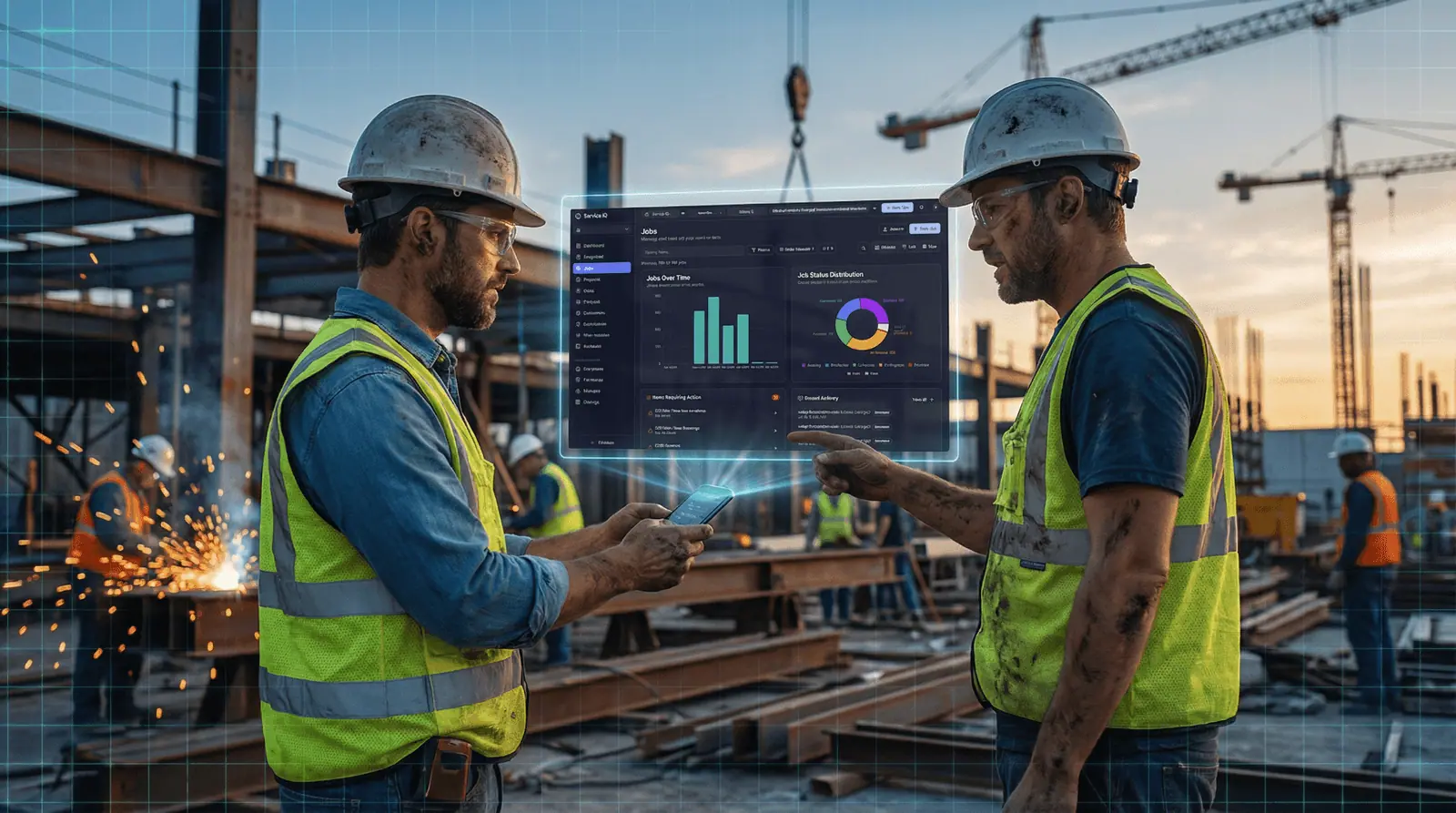
Human review is the most common answer to AI risk in construction, and the weakest. Here is what a control has to do once approval becomes a reflex.
AI in the Construction Workplace: Five Problems
Five problems come up on nearly every contractor's desk, change orders, information overload, rework, slow payment, and knowledge loss, and the AI that fits each.
You Can't Ban Your Way Out of Shadow AI
A dispatch from AGC Tech 2026, where every IT Director in the room had the same idea for stopping unapproved AI use, and the data says it's the wrong one.
See ServiceIQ run your service operation
Dispatch, work orders, customer history, and billing on one platform, built for contractors growing past whiteboards and group texts.
Get started free