
AI in the Construction Workplace: Five Problems Every Contractor Recognizes
Quick answer: Five problems come up on nearly every contractor's desk: change orders that trail the work, time lost looking for information, rework from outdated revisions, slow payment, and expertise that leaves with the people who hold it. Each one lands on a specific person, and each maps to a different kind of AI: document understanding, retrieval over your own records, document control with follow-up, workflow automation with an audit trail, and institutional memory. The sensible order is to pick one problem, measure it for 90 days, and then choose a tool.
Key Takeaways
- ●Change orders: 98% of GCs have seen fee erosion from change-order negotiations (Dodge Construction Network and Clearstory, 2026).
- ●Information overload: survey respondents spent 35% of their time, over 14 hours a week, on non-productive activities including looking for project information (FMI and PlanGrid, 2018).
- ●Rework: respondents attributed 48% of US rework to poor project data and miscommunication (FMI and PlanGrid, 2018).
- ●Slow payment: 91% of GCs weigh a project owner's payment reputation in their bids, and 88% declined to bid in the last 12 months because of one (Rabbet, 2025).
- ●Knowledge loss: about 41% of the construction workforce is projected to reach retirement age by 2031 (NCCER projection).
- ●Start with one problem, baseline it for 90 days, and ask any vendor three questions before you commit.
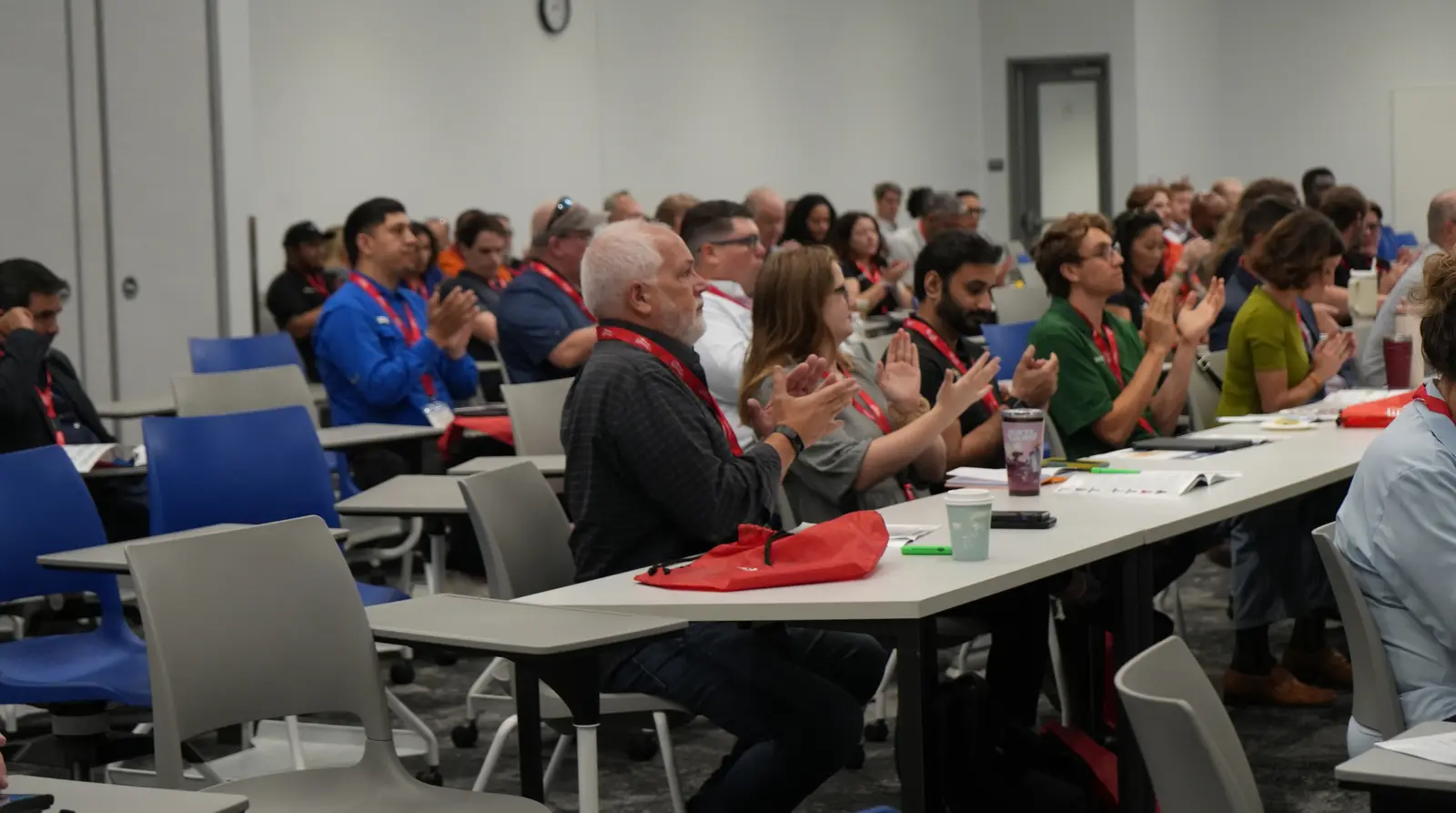
This is the written version of our EdTech Summit session. Each of the five problems has its own article with the sources, the limits of each number, and what the technique looks like in practice.
Why Now
About 41% of the construction workforce is projected to reach retirement age by 2031, a projection from NCCER that Deloitte and Bridgit also cite. Bridgit's 2026 benchmark of 233 companies and 114,000 people puts median attrition at 18.7%, while senior project managers leave at 3.6%. The experience that holds a company's margins together sits with a small group, and the paperwork that experience used to absorb is landing on fewer people.
Five Problems, Five Kinds of AI
| Problem | Where it lands | The kind of AI that applies |
|---|---|---|
| Change orders | A PM assembling it by hand | Document understanding |
| Information overload | Project teams searching | Retrieval over your own records |
| Rework and version control | The superintendent, informally | Document control with follow-up |
| Slow payment | The controller or bookkeeper | Workflow automation with an audit trail |
| Knowledge loss | The senior estimator | Institutional memory |
The Five Problems
- →**1. Change orders.** 98% of GCs have seen fee erosion from change-order negotiations, and 72% still run the process mainly out of spreadsheets. In one ServiceIQ implementation, an incoming RFI is checked against scope, priced from the matching estimate line and contract clause, drafted as a change order, and routed to a person. Nothing goes out without a signature. Read "The Fee You Lose Between the Field Text and the Change Order."
- →**2. Information overload.** Respondents in a 2018 survey spent 35% of their time on non-productive activities, and in a 2021 survey 30% said more than half of their project data is bad. In one ServiceIQ implementation, every record is indexed as it's created and a PM gets the answer to a plain-language question with its source attached. Read "A Third of the Week Is Spent Looking for Things."
- →**3. Rework and version control.** Respondents attributed 48% of US rework to poor project data and miscommunication, and in one contractor's records pre-completion rework was under-reported by 300%. In one ServiceIQ implementation, a new revision is marked current, transmittals serve as time-stamped proof of delivery, and the morning briefing lists revisions a sub hasn't acknowledged. Read "Revision C Was Issued. The Field Was Still on B."
- →**4. Slow payment.** 91% of GCs weigh a project owner's payment reputation in bids, and GCs spend an average of 65 hours a month managing payments to subs and vendors. In one ServiceIQ implementation, pay applications are generated from schedule-of-values progress, with retainage per line and per period.
- →**5. Knowledge loss.** Senior project managers leave at 3.6% a year against an industry median of 18.7%, and margin depends on judgment that's rarely written down. In one ServiceIQ implementation, completed projects are ingested with estimates, actual costs, and realized margins per line, and new estimates surface comparable past scopes. Read "The Estimator's Twenty Years Leave With the Estimator."
Four Ways Into AI
The AI stack has four layers. The foundational model sits at the bottom, fine-tuning adapts a model to your data, governance covers approvals, audit trails, access, and policy, and orchestration is where agents, tools, and workflows do the work end to end. You don't have to own all of them. How much you own sets both the cost and the risk.
- →**BYO AI.** People bring their own tools. Nothing is governed, owned, or auditable, so the cost is zero and the risk is unbounded. "You Can't Ban Your Way Out of Shadow AI" covers this one.
- →**Turnkey.** You buy the outcome and the provider manages every layer. You configure settings and users. It's the fastest to value, and it suits a common workflow where speed matters more than differentiation.
- →**Hybrid.** The provider runs the model and you own orchestration and governance, either configuring it or customizing it. It suits a company whose process is its edge or whose data and vocabulary are unlike anyone else's.
- →**In house.** You own all four layers, including the model. It makes sense when the model itself is the product, and in our view nearly every contractor should skip it.
Pick the layer you can actually staff.
Four Questions to Ask Any Vendor About Your Data
- →**Where does the data sit?** Which systems does it read, where is it stored, and is any of it used to train someone else's model?
- →**Who can see what?** Role-based access should match the portals you already run, whether GC, contractor, partner, or admin.
- →**What's on the record?** Every action should be logged with the actor, timestamp, and source document, to the same standard as a pay application.
- →**Who approves?** No action should reach a customer without a human signature. In one ServiceIQ implementation, that's how it works.
What None of This Does
It doesn't replace judgment. Which change to fight for, which sub to trust, and when to walk away stay with a person, and the system drafts while the person decides.
It doesn't fix bad inputs. An RFI that was never logged or an email that was never connected to the job is invisible, so data hygiene comes first.
It doesn't repair a contract. A pay-when-paid clause or a bad estimate that's already signed stays signed, and the tool shows the consequence sooner.
It doesn't act alone. Every action routes to an approval, which is a design choice and the one to insist on from any vendor.
Where to Start
Pick one problem. Choose the one your PMs complain about most, since it has the most motivated users.
Baseline it for 90 days. Count the RFIs with cost implications, and time a pay-application cycle. You need a "before" number of your own.
Then ask any vendor three questions. Which of my systems does it read? What does it do when it finds something? Who approves?
"The Complete Guide to Choosing Field Service Software" has the wider vendor checklist.
The slides from our EdTech Summit session, "AI in the Construction Workplace," are a free download.

AI in the Construction Workplace
The free slide deck this article is based on, as presented at the ABC EdTech Summit: five problems, five techniques, in one sitting.
Get the free slide deckPick One Problem and Run Your Own Jobs Through It
Free for 14 days, no card needed.
Start your free trialFrequently asked questions
Keep reading

The Fee You Lose to Change Orders
98% of GCs have lost fee to change-order negotiations, mostly in the gap between a field change and the paperwork catching up. Here's where it goes.
A Third of the Week Is Spent Looking for Things
Construction teams lose 35% of the week, $177.5B a year, hunting for information spread across emails, logs, photos, and spreadsheets. Here's the real cost.

Revision C Was Issued. The Field Was Still on B.
48% of US rework traces to poor project data, and one contractor under-reported it by 300%. Here's how marking one revision as current closes that gap.

The Estimator's Twenty Years Leave With the Estimator
41% of the construction workforce is projected to retire by 2031, and estimating judgment leaves with them. Here's how to capture it before they go.

You Can't Ban Your Way Out of Shadow AI
A dispatch from AGC Tech 2026, where every IT Director in the room had the same idea for stopping unapproved AI use, and the data says it's the wrong one.

Choosing Field Service Software: Complete Guide
Six things that decide whether field service software works for your business, pulled into one buyer's guide, with the exact questions to ask before you sign.
See ServiceIQ run your service operation
Dispatch, work orders, customer history, and billing on one platform, built for contractors growing past whiteboards and group texts.
Get started free