What Is an AI Agent Harness? A Plain-English Guide for Contractors

Quick answer: An AI agent harness is the software wrapped around a large language model that lets it take actions instead of only answering prompts. It runs the loop, connects the model to tools, keeps memory and context, enforces permissions, pauses for human approval, and records what happened. For a contractor, the harness is the part worth evaluating, because it decides which records an AI can read, what it can draft, and who approves before anything reaches a customer.
Key Takeaways
- ●Engineers summarize the idea as "agent = model + harness." Everything in an AI agent that isn't the model is the harness.
- ●A harness has seven parts: tools, context and memory, permissions, approval gates, an audit trail, integrations, and guardrails.
- ●A 2026 UN University policy report recommends explicit approval gates, least-privilege access for tools, and actions that can be interrupted, resumed, and reversed.
- ●There are four ways into AI: bring your own, turnkey, hybrid, or in house. The right one is the layer you can actually staff.
- ●ServiceIQ is turnkey, with customizable options, and it routes every action to a person for approval.
The Short Version
A large language model takes in text and returns text. On its own, it can't open your RFI log, update a schedule, or send anything to a customer. The harness is what gives it those abilities and decides how far they go. Think of a very smart new hire. They can read and reason, and they still need keys, access to files, a rule for what leaves the building, and someone to check their work.
What a Harness Does
A harness runs the loop that asks the model what to do next and then carries out the actions the model requests. It keeps context and memory from one step to the next. It checks each action against permissions, pauses for a person when a decision needs one, and logs what happened. Microsoft describes it as the runtime scaffolding that sets the rules for approvals and multi-step tasks, and Anthropic calls its Claude Agent SDK a general-purpose agent harness.
On a jobsite, those seven parts look like this.
- →**Tools.** The actions the AI can request, like drafting a change order or updating a schedule.
- →**Context and memory.** What the AI can see for each task.
- →**Permissions.** Which records it can touch, by role.
- →**Approval gates.** Where a person decides before the work moves on.
- →**The audit trail.** A record of who did what, when, and from which source.
- →**Integrations.** The connections to your CRM and accounting.
- →**Guardrails.** Checks and limits on what goes in, what comes out, and what the AI can do alone.
The word "harness" also means a test framework for models, called an evaluation harness, and it means the fall-protection gear you wear at height. The safety gear is the closer comparison. It lets you work at height because a system is attached to catch a mistake, and an AI harness does the same job for an AI that's allowed to act.
Why Contractors Should Care About the Harness
Models change every few months. The harness is what you live with, because it decides what an AI can read, what it can do with it, and whether anyone sees the action before it lands.
The UN University report, "Engineering and Governing the Agent Harness," treats the harness as a distinct object of governance and recommends evaluating a deployed agent as a model-and-harness pair. For a contractor, the practical version is to compare AI products by what they can read, what they can do, and who has to approve, and to skip the question of which model sits underneath. AI Brain or AI Harness: Which One Ships Work goes deeper on that same distinction, from the strategy side.
Four Ways Into AI
- →**Bring your own AI.** People use their own tools. Nothing is governed, owned, or auditable, so the cost is zero and the risk is unbounded. You Can't Ban Your Way Out of Shadow AI covers this one.
- →**Turnkey.** You buy the outcome, and the provider manages every layer. You configure settings and users. It's the fastest route to value for a common workflow.
- →**Hybrid.** The provider runs the model, and you own orchestration and governance. It suits a company whose process is its edge or whose data and vocabulary are unlike anyone else's.
- →**In house.** You own every layer, including the model. For nearly every contractor, that's a distraction, and it takes a team most don't have.
Pick the layer you can actually staff. AI Harness vs AI Assistant for Contractors looks at this same choice from the buyer's side.
Seven Questions to Ask Any Vendor
- Which of my systems does it read?
- What does it do when it finds something?
- Who can see what?
- Who approves?
- What's on the record?
- Where does the data sit, and is any of it used to train someone else's model?
- What happens when it's wrong, and can I leave with my records?
Where ServiceIQ Fits
ServiceIQ is turnkey. We manage the layers, you configure your settings and users, and the platform has customizable options built in. If you need further configuration, reach out to us.
Every action routes to a person. In one ServiceIQ implementation (September 2026), an RFI is checked against scope, priced from the matching estimate line and contract clause, and drafted as a change order for a person to approve, and nothing goes out without a signature. Outside parties approve by email without creating an account. The Audit and Change Log records activity on a job. HubSpot, QuickBooks, and CompanyCam are native integrations, and monday.com, Microsoft 365, and SharePoint connect through MCP integrations.
What a Harness Doesn't Do
It doesn't replace judgment, so which change to fight for or which sub to trust stays with a person. It can't see an RFI that was never logged or an email nobody connected to the job, so the records come first. A contract that's already signed stays signed, and the tool shows the consequence sooner. And it shouldn't act alone, which is why every action routes to an approval. Sign-Off Alone Is Not an AI Harness digs into why a person reviewing every output still isn't the same thing as a harness.
Where to Start
Pick one problem, the one your PMs complain about most. Baseline it for 90 days by counting RFIs with cost implications or timing a pay-application cycle. Then ask any vendor which of your systems it reads, what it does when it finds something, and who approves.
The AI Harness
The AI Harness: A Contractor's Plain-English Guide to What Sits Around the Model covers all seven parts, the seven vendor questions, and a glossary.
Get the free field guide
Want to See It on Your Own Jobs?
ServiceIQ is free for 14 days, no card needed.
Start your free trialFrequently asked questions
Keep reading

AI Harness
An AI harness is the control layer around AI on a live job: what it can touch, what it may do unasked, who signs off, and what proves the decision later.
AI in the Construction Workplace: Five Problems
Five problems come up on nearly every contractor's desk, change orders, information overload, rework, slow payment, and knowledge loss, and the AI that fits each.

You Can't Ban Your Way Out of Shadow AI
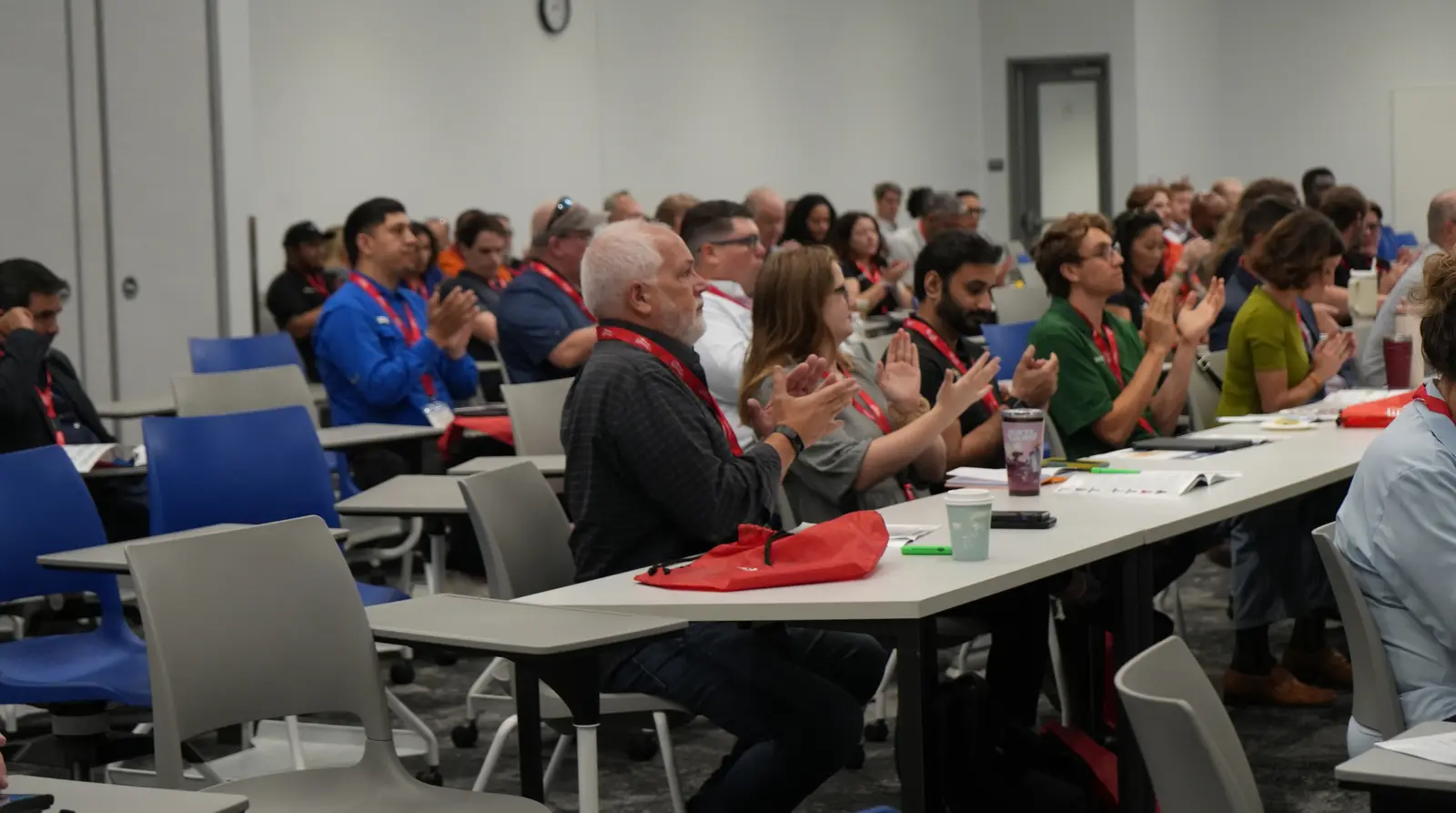
A dispatch from AGC Tech 2026, where every IT Director in the room had the same idea for stopping unapproved AI use, and the data says it's the wrong one.

Choosing Field Service Software: Complete Guide
Six things that decide whether field service software works for your business, pulled into one buyer's guide, with the exact questions to ask before you sign.
See ServiceIQ run your service operation
Dispatch, work orders, customer history, and billing on one platform, built for contractors growing past whiteboards and group texts.
Get started free