
Commercial and Industrial Are Not the Same Business
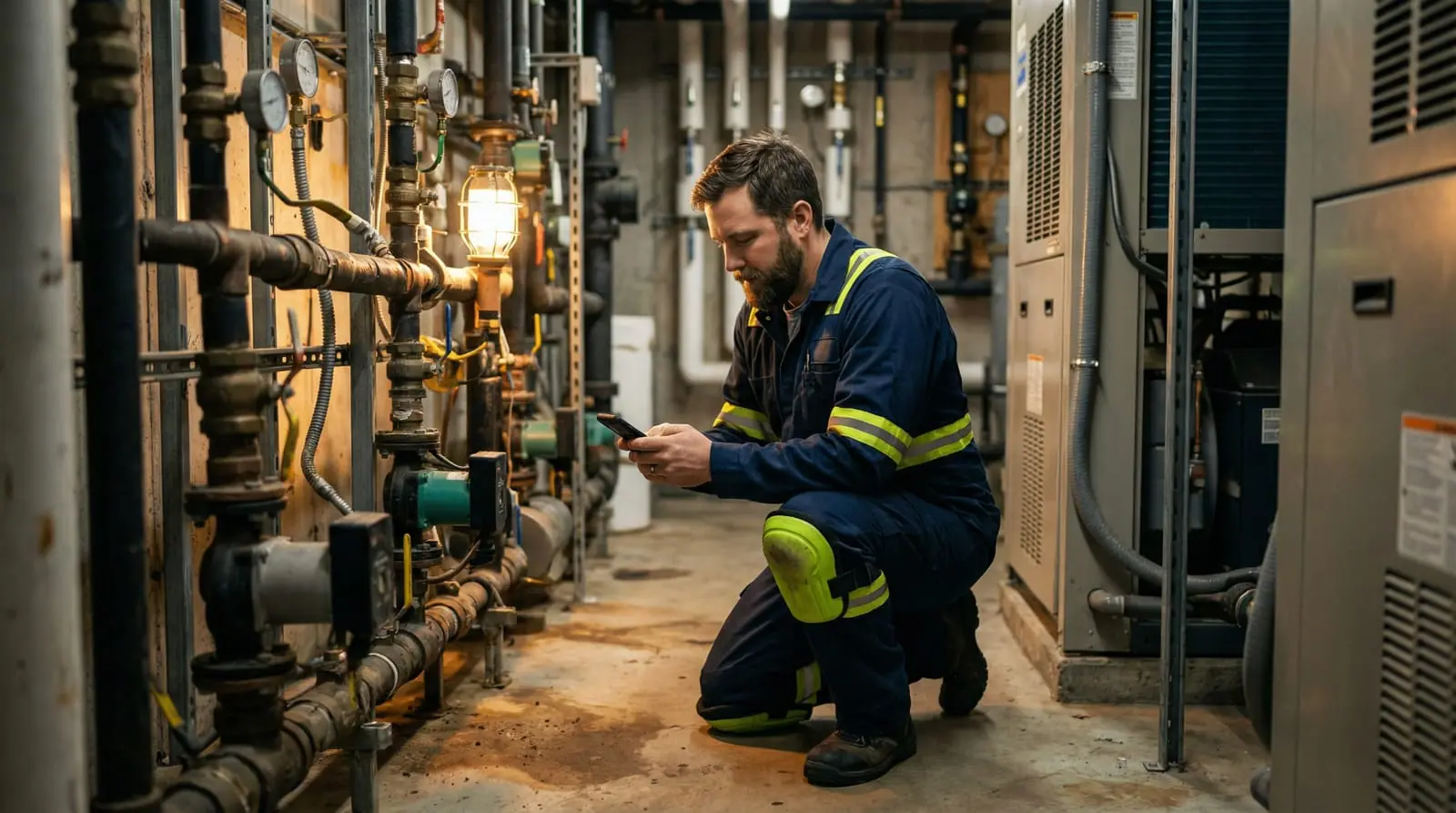
Quick answer: Commercial construction builds spaces where people work, shop or gather — offices, retail, hospitality, healthcare — and is driven by occupancy, code and finish quality. Industrial construction builds facilities that house a process: plants, refineries, warehouses and utilities, where the building exists to serve equipment. The practical difference is that commercial work is governed by an occupancy date and industrial work by a production date.
Key Takeaways
- ●Commercial construction serves people and is judged on space, finish and occupancy. Industrial construction serves a process and is judged on throughput and uptime.
- ●Industrial projects carry heavier mechanical, electrical and process scope, longer equipment lead times, and shutdown windows that cannot move.
- ●The sequencing logic inverts. Commercial work builds the shell and fits it out; industrial work frequently designs the building around equipment that was specified first.
- ●Both use progress billing and retainage, but industrial contracts more often carry liquidated damages tied to production downtime rather than to occupancy.
The Line Between Them
The simplest way to tell commercial and industrial construction apart is to ask what the building is for. If it exists so that people can occupy it — work, shop, eat, be treated, stay the night — it is commercial. If it exists so that a process can run inside it, the building is industrial, and the people in it are there to tend the process.
That distinction sounds semantic and turns out to be structural. A commercial building is designed outward from human requirements: circulation, daylight, acoustics, accessibility, finish. An industrial facility is designed outward from equipment requirements: floor loading, clear height, power density, ventilation, chemical resistance, vibration.
Everything downstream follows from that inversion — what the trades do, what the schedule is built around, and what happens when something slips.
| Commercial | Industrial | |
|---|---|---|
| Purpose | Human occupancy and commerce | Housing a production or process function |
| Typical projects | Offices, retail, hospitality, healthcare | Plants, refineries, warehouses, utilities |
| Schedule driven by | Occupancy or tenant opening date | Equipment delivery and production start |
| Dominant scope | Architectural finishes, MEP fit-out | Process mechanical, heavy electrical, piping |
| Delay exposure | Lost rent, delayed opening | Lost production, often liquidated damages |
| After handover | Warranty and routine maintenance | Ongoing service contract, shutdown work |
Sequencing Runs Backwards
On a commercial project the shell generally comes first and the fit-out follows. Structure, envelope, then mechanical and electrical rough-in, then finishes, then occupancy. The sequence is well understood and the long-lead items, while real, rarely dictate the whole programme.
Industrial work often runs the other way. A piece of process equipment with a nine-month lead time is specified early, and the foundation, the structure, the power distribution and the access route are all designed to receive that specific machine. The building is, to a degree, packaging.
The consequence for a contractor is that industrial schedules have less slack in unexpected places. A commercial fit-out can usually resequence around a late delivery of light fittings. An industrial project cannot resequence around a late transformer, because everything downstream of energisation is waiting on it.
Shutdowns Change the Risk Profile
The feature of industrial work with no real commercial equivalent is the shutdown — a planned window in which production stops so that work can be done, and outside of which the work cannot be done at all.
Shutdown windows are fixed, short, and enormously expensive to the owner. That shapes everything about how the work is contracted and staffed: crews are sized for the window rather than for efficiency, materials are staged completely in advance, and contingency is built into the plan rather than discovered during it.
It also changes the commercial terms. Liquidated damages on a shutdown are typically tied to the owner's lost production, which can exceed the value of the contract itself on a daily basis. Contractors who move from commercial into industrial work frequently underestimate this and price shutdown work on a commercial risk basis, which is a mistake that only needs to be made once.
Why the Distinction Matters Operationally
Most mid-market mechanical and electrical contractors work across both. They fit out offices and they service plants, often with overlapping crews and always with one set of books.
The operational difficulty is that the two halves want different things from a management system. Commercial project work wants submittals, RFIs, progress billing and retainage. Industrial work wants those too, plus equipment histories, planned maintenance schedules and the ability to mobilise a large crew into a narrow window.
The relationship after handover is the sharpest difference. A commercial project largely ends at practical completion and a warranty period. An industrial facility is the beginning of a service relationship that may run for decades, and the contractor who built it is usually the one maintaining it. A system that treats handover as the end of the record throws away the asset history exactly when it starts being valuable.
See ServiceIQ run your service operation
Dispatch, work orders, customer history, and billing on one platform — built for contractors growing past whiteboards and group texts.
Get started freeFrequently asked questions
Keep reading

Project Delivery Methods & Scheduling
Design-Bid-Build, Design-Build, CMAR, and Integrated Project Delivery each schedule differently, and the method you pick decides your schedule before a single stake goes in the ground.

Construction Manager vs. Project Manager
Ray and Priya both assumed someone else said yes to a Saturday pour. Nobody did. What actually separates a Construction Manager from a Project Manager, and why the same job title means two different jobs under CMAR.

Job Costing for Profitability
A controller's guide to construction job costing: direct vs. indirect costs, committed costs, the 10-step estimating process, and the WIP reporting that reveals over- and under-billing.
See ServiceIQ run your service operation
Dispatch, work orders, customer history, and billing on one platform — built for contractors growing past whiteboards and group texts.